Showing posts with label in review. Show all posts

Monday, August 31, 2009

Reading, Watching, Listening ... August 09 in Review

Books read in August 09

Epistolary novel

The Guernsey Literary and Potato Peel Pie Society by Mary Ann Shaffer

I rather enjoy epistolary novels. It would grow tiresome if every novel employed that technique but once in awhile I find it fun.

I will have to add this to my growing list of WW II reads in recent years. I picked Guernsey Literary and Potato Peel Pie Society book based on the quirky title and the fact it kept showing up on Goodreads and other lists. I didn't expect the setting or story at all.

I now feel like I know a bit more about the Channel Islands between France and Britain. And again, I've a slice of WWII life from a different angle.

The novel is set in the year following the war and it's about a young British writer, Juliet, who stumbles upon a story, actually a rich collection of stories, when a young man, Dawsey, decides to write an inquiry about Charles Lamb. Incidentally Charles Lamb has come up a fair amount in the past year and I wonder if this book has anything to do with that!

I enjoyed the characters, the spirit of the story and am happy to have read this book!

Sci Fi/July's RRVWP Book Club Pick

The Diamond Age, or a Young Lady's Illustrated Primer by Neal Stephenson
We read this book for July and I was about half done when we met to discuss it. It seems I'm about half a book behind at every book club meeting because the same thing happened this month with Thunderstruck. (Am determined that I'll be back on track for September!)

This was one "messed up" book. I liked it and I didn't like it all at once. It's a post-cyberpunk novel and it's really the story of Nell, a young disadvantaged girl (a thete -- person without a phyle) living in a futuristic version of Shanghai in a world that no longer has countries but has people groups, also known as tribes or "phyles."

John Percival Hackworth, a scientist, is part of the Victorian phyle and he creates an interactive primer, the likes of which have never been seen before, for the daughter of his superior, but not before making a copy for his own daughter. When his copy falls out of his hands and into Nell's he is forced to create one more.

The story follows Nell as she uses the Primer, and to a lesser degree, two other girls who receive similar books, na
med Elizabeth and Fiona. The Primer reacts to its owners environment and teaches them what they need to know to survive and grow.

The difficulties I had with this story were more of a stylistic nature. I found some of the dense description to be unwieldy and actually unclear. His murky descriptions of things in this futuristic world left me unable to visualize things and at times I wasn't really clear on where the various characters were in the world and how they got there. The terminology is to be expected with a sci fi book and so I wasn't surprised by the vast number of words I needed to add to my vocab in order to navigate the Stephenson book, since all books of this genre do this, but there were times when it just became a bit much.

The book plays with the notion of education, the role of a teacher/mentor, with communication and the idea of a "group-mind or hive-mind." It explores nanotechnology, seed technology, artificial intelligence a
nd its failures and the sociology of a world without countries.

It's an interesting book and while I didn't love it, it still proved to be a good book club choice simply for the discussions that emerged


History/August's RRVWP Book Club Pick

Thunderstruck by Erik Larson (in progress)

Having read Larson's Devil in the White City, I expected to enjoy this title too. Thunderstruck is a book which interweaves the stories of Hawley Crippen, a murderer, and Guglielmo Marconi inventor of wireless technology. I am finding it to be a less gripping story than The Devil in the White City and it's not moving as quickly for me, but it's also been a really busy time of year. Expect a review to follow next month!

Films watched in August 09
Bolt (library rental)
Mamma Mia (rental -- rewatched)
The Ugly Truth (theatre)
Happy Go Lucky (library rental)
Fool's Gold (borrowed)

Music listened to in August 09

Mostly My Chemical Romance as I prepped my classroom for the start of school

Friday, July 03, 2009

Reading, Watching, Listening ... June in Review

Books read in June

Summer School Books (all rereads)
Fahrenheit 451 by Ray Bradbury
This is the story of one man pitted against society. A society in which books are forbidden, front porches are obsolete, kids are murderous and wild, billboards are extended in length because drivers drive at top speed. Everything happens at top speed. Reflection, conversation, long walks are taboo. The way I see it, Bradbury combines the messages of George Orwell's 1984 with Aldous Huxley's Brave New World and this book is what emerges.

Montag is a fireman. Firemen are an extension of the police, the keepers of t
he peace. The police arrest dissenters, folks who've been turned in by neighbors, friends. Then Montag and the rest of his crew arrive to torch the place. Instead of water, their hoses are full of gasoline. They burn the contents of the homes, eliminating contraband. Cleaning up.

Things are fine for Montag, at least o
n the surface, until one day he meets a young girl named Clarisse who walks home with him, who asks him questions, who wonders things out loud, who asks him if he's happy. When she turns toward her house, he realizes he is not.

He sees his wife, overdosed on sleeping pills, ear buds whirring away in her ears filling her mind with so much noise and information
there isn't room for independent thought. He calls the portable MDs who come to pump her stomach and he's sick at what they've become. When he tries to talk to his wife the next day she's only interested in the TV Parlor where her programs are projected on three walls, all she needs is a fourth wall and things will be complete.

Montag's dissatisfaction mounts until he cannot go back and his ordered world unravels from there.

The book is filled with Bradbury's future technology... crafted by him in the 19
60s --some of which are very real things today. The book is full of philosophical exploration on the worth of books and the way that people interact with them. I can't really begin to fully explain or explore this issue in this small space. I can only say, READ this book. It should remind you of why we must never stop reading. Never stop questioning. Never stop trying to make a difference in our worlds.

A Midsummer Night's Dream by William Shakespeare
I've read Shakespeare's A Midsummer Night's Dream countless times because I use it in my classroom. It's fanciful and funny. Never pass up a live performance and the 1999 film's pretty good too! This summer we read it aloud using our school's lecture bowl stage and walked through the roles butchering the play much like Bottom, Quince, Flute and so forth perform Pyramus and Thisbe. What fun! If you've never read this play... get thee to the library and find a copy!


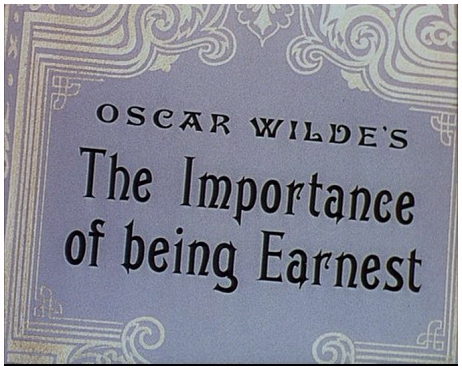
The Importance of Being Earnest by Oscar Wilde
I get a kick out of Wilde's plays--they're all great . In summer school, we read The Importance of Being Earnest --a punny play full of misunderstanding, deception, absurdity, and laughter. Oh, and love. In typical comedic form, it all ends well. The 2002 film with Rupert Everett and Colin Firth is most excellent, as well. While it does stray some from the order of events in the play, the director does a fine job of capturing the spirit of Wilde even adding some nice, tattooed touches. :) Read it, watch it--preferably in that order--you won't be disappointed.

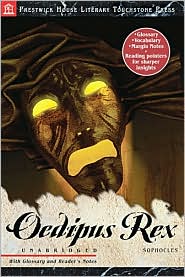
Oedipus Rex by Sophocles
Ahhh, good old Oeddie. I would say that in 14 years of teaching I've read this play aloud hundreds of times. I've nearly got bits of it memorized. For some reason the unusual play format and the poetic choral odes freak students out so I find myself reading the parts. At one time, our tutor Tara and I contemplated filming ourselves enacting it in front of city hall because it seemed like the right architecture, but we just never got down to business. Instead I crafted a few paper doll popsicle stick puppets and when I do end up reading it aloud with kids I do all the voices and use the puppets as a means of demonstrating when characters arrive in the scene and depart. It's pretty funny for me, actually. I love the look of dismay when the 18 year olds see me getting it all set up!

Many of the kids are familiar with the story because they usually read Antigone in grade 10. And once we get going they discover it's easier to read than Shakespeare simply because of the Greek being translated into a modern English. The allusions are heavy in this play but most textbook versions have good footnotes and meaning can be grasped regardless. If you've not read any Sophocles, this one is good fun. It has a lovely gross out factor at the end and it explores fate, fidelity, friendship, folly, hmmmm... leadership, relationship to the gods, the search for truth, and pride. (Just couldn't keep up the alliteration!)

Essays

This I Believe:The Personal Philosophies of Remarkable Men and Women by Jay Allison
I first learned about This I Believe on NPR and by visiting the website I discovered curriculum I could use with my students. I checked the book out of the library and decided to read it but discovered it's far easier to read an essay here and there rather than tackle it cover to cover. Instead, it's taken me weeks to work my way through the essays, though they each read in mere minutes. I found myself selecting which to read based on the titles "Be Cool to the Pizza Dude" or because I recognized the authors' names -- John Updike, Loudon Wainwright III, Gloria Steinem.

Many of the essays moved me to tears and others made me smile or nod in agreement. I love this idea--trying to capture what one believes in 350-500 words.

Here are my favorites in order of appearance in the volume--of course, as I type these I realize there are still some I have yet to read--here's my list as of today--
"In Giving I Connect with Others" by Isabel Allende
"Good Can be as Communicable as Evil" by Norman Corwin
"The Connection Between Strangers" by Miles Goodwin
"The Power of Presence" by Debbie Hall
"A Grown-Up Barbie" by Jane Hamill
"The Making of Poems" by Gregory Orr
"The America I Believe In" by Colin Powell
"When Children Are Wanted" by Margaret Sanger
"There Is No Such Thing as Too Much Barbecue" by Jason Sheehan
"A Balance Between Nature and Nurture" by Gloria Steinem
"Always Go to the Funeral" by Deidre Sullivan
"How Do You Believe in a Mystery" by Loudon Wainwright III

YA/Juvenile Fiction

The Graveyard Book by Neil Gaiman

This is the story of Nobody Owens--a boy who comes to the graveyard as a baby and is taken in by ghosts to raise as their own, when the babies recently murdered family begs for his protection. A killer still lurks that night and years later, wanting to "finish the job."

We see Bod grow from a small child, he's cared for and educated by an interesting cast of characters. We experience the adventures a young boy might experience in a graveyard, some harmless, some terrifying. We meet his only living friend, not once in the story, but twice years later when she and her mother return to town.

We finally learn the reason he was marked for death and we see the greater forces at work.

The story was quite charming. After reading Coraline, I was leary. I found Coraline to be too scary for me, let alone small children. I wondered if this might be the same. I will say the opening murders and the terror of being pursued by a dangerous mad man at the end might be a bit much for kids. I wonder at the books selection as this year's Newbery. It seems like it has a limited audience for those violent elements at least. As a parent, I would READ this first, before pressing it into the the hot little hands of your child. Only you, truly know what your children can handle.

Gaiman said he always loved Rudyard Kipling's Jungle Book and that this was his version... a man child raised by ghosts, instead.

RRVWP Book Club Pick --Fiction
Slaughterhouse Five by Kurt Vonnegut

Years ago my sister Lori read this book and immediately demanded that I read it so we could discuss it. I didn't get around to it, until now when our book club decided this was the "classic" we were going to tackle for June. We usually try to read at least one of those books that many consider to be part of our literary consciousness. There are so many, and even as an English teacher, I've not read them all. It turned out THIS was a title many of us hadn't read.

The general response was mixed. I actually liked the book. I agree with my sister, though, it was a bit "messed up" and demanded discussion. With the internet so handily available I immediately googled the book and read the Wikipedia page, some of the Spark Notes, and several articles about the book, including some biography pages of Kurt Vonnegut.

This was not my first exposure to Vonnegut, however. In college I read Cat's Cradle, a book which also inspired a "what the heck" as I read it. Both books have an irreverence for Christianity that might be part of why his work is so frequently getting "challenged" in schools and libraries. I, also, use the short story "Harrison Bergeron" with students.

One question that was posed at book club was "Why? Why is this book considered such a classic?"

We speculated and here are a few ideas that emerged. Slaughterhouse Five is a story within a story. It's a great example of post-modern writing. Part of the lesson that Billy Pilgrim learns from the Tralfamadorians (the aliens who abduct him and put him on display in a zoo on their planet) is demonstrated in the time travel. The structure of the novel seems to be doing something unusual and while that alone might be noteworthy, the subject matter is. We didn't completely solve this question.

It's an anti-war story told at a time when the world was rather fed up with the Vietnam War. It's a story about the bombing of Dresden and one man's response to that event. Vonnegut, himself, actually survived the bombing of Dresden and perhaps this is his way of dealing with that event.

This novel reminded me of Hemingway's short story "A Soldier's Home" which is in our American Literature textbook. In that story, Harold Krebs returns home from war and is clearly suffering from a post-traumatic stress disorder. Billy Pilgrim in Slaughterhouse Five is much the same. His apathy, "so it goes," to everything in his life from his wife, to his kids, to his job, is indicative of the sort of man he's become post-war. He only seems to get excited by Kilgore Trout, an unknown, unusual author whose work he's introduced to in the mental institution following the war. Kilgore Trout is a terrific character, the alien bit was great fun. And the war segments which actually do seem to appear in a chronological order were intriguing. Those bits made me want to know more about what happened in Dresden. They reminded me that I've read another version of that event in Jonathan Safron Foer's book Extremely Loud and Incredibly Close.

In a way, it's rather interesting how many WWII books keep falling into my lap, quite unintentionally. Each from a different angle, a different slice of the event. I feel like I'm growing.

Slaughterhouse Five was worth the read, I'd recommend it even though some book club members would not. We had a rousing discussion, so there's always that!


Films watched in June

Click the links to see my in-depth posts on these movies.

Taken
Up
He's Just Not That Into You
Last Chance Harvey
Revolutionary Road
A Midsummer Night's Dream*
Much Ado About Nothing*

Angels and Demons
Nights in Rodanthe
Bride Wars

Mr. Smith Goes to Washington*
The Importance of Being Earnest*

* films I've seen before

Music listened to in June
Already Free by Derek Trucks Band
I bought this CD in preparation for the concert which I attended a couple weeks ago. I still need to finish that blog post. It was terrific and his cd is too. Give it a listen!

God Help the Girl
I can't even remember which blog had a mention of this fine group and their divine CD, but I'm forever grateful. It's been in heavy rotation since I picked up my copy on July 23rd. Yum. This may warrant a blog post of its own, but I will say this much. I can't pick a favorite song because they are all wonderful. The music has a sort of late 60s feel to it. Vintage, yet modern. I don't really have the words to say how much I adore this album.

Heart's Greatest Hits
I blogged about this cd here, two years ago.
My current favorite song this go round is "If Looks Could Kill"

Monday, June 01, 2009

Reading, Watching, Listening ... April & May in Review

Books read in April and May

Professional Books
Image Grammar by Harry R. Noden

For decades, scholars have urged teachers to integrate grammar and writing, yet few have provided teachers with enough strategies and materials to do so. With this ground-breaking book, Harry Noden meets this need in a unique way. This is the generic review on Goodreads. I need to revisit the book in order to explain what it was I loved so much about it, because love it, I did. It was chock full of great ideas and ways to help kids use grammatical structures to improve writing. After all, that's what grammar is for. Grammar learned in isolation is trivia, used in writing it's craft. I'll try to post a link again later when I have a proper review written.

Young Adult/Juvenile Books

Coraline by Neil Gaiman

What the what? That was my first reaction to this book. I had no idea how very scary it was going to be. I was more than a little freaked out while reading this one. Yet, I still want to see the movie.

Early on in the story, Coraline's mom dismisses the relevance of a strange locked door in their parlor after showing Coraline how it merely opens to a bricked up wall, yet when Coraline tries it on her own she finds a passageway. Coraline lives in one part of a house divided into flats. Other occupants are the crazy old man upstairs and the two retired aging actresses.

Ultimately, the book is about a girl who uses a key to open the door between her flat and an unoccupied one on the other side and discovers a rather frightening parallel world on the other side complete with an "other mother" and "other characters" with button eyes. The "other mother" is greedy for Coraline's company and never wants her to leave. Though she looks like her own mother, she seems like a giant spider who's spun an elaborate web in order to trap Coraline who must find a way to save not only herself and her parents but five other souls the "other mother" has previously taken captive.

Creative and fantastical, It's a bit dark and spooky and probably not for young children.

Little Brother by Cory Doctorow

I read Little Brother in haste trying to decide if I could use it in my Senior Lit summer school class. While I liked it immensely, I decided I'd wait and try to think of a great unit for fall.

First off, Cory Doctorow's book is available for free download here:
http://craphound.com/littlebrother/download/ though I did read a hardcover book format.

Doctorow welcomes the sharing of works and is very much in support of broad copyright laws.

Little Brother is the story of what happens to 17 year old, Marcus and a group of his high school friends the day San Francisco suffers a terrorist attack. They'd skipped school to play an Internet role playing game and were street side trying to escape the crowds after one of their friend was stabbed in the mobs heading for shelter after the bombs blew up in the distance. Suddenly bags are thrown over their heads, the arms are pinned behind their backs and they are cuffed to a pole inside a van. They'd been taken prisoner. At first the reader thinks they've been abducted by the terrorists. Later, we learn it was by homeland security who believed they were suspicious particularly Marcus who demands a lawyer and refuses to give up passwords to his cell phone and other techie equipment he had on his person. The kids are detained in cells and questioned repeatedly for five days before they are released forbidden to tell anyone what happened.

They are forced to lie to their parents who believed they were dead when they never came home. Many, many people are missing because the attacks hit both the Bay Bridge and the Bart tunnel from Embarcadero to the West Oakland station. The Department of Homeland Security has ramped up their surveillance and created "protective" measures everywhere. The city feels like a police state. Marcus doesn't feel safe using the Internet, he knows he's being watched. But he's furious that he and others, innocent people, are being treated like the terrorists the DHS is claiming they are trying to protect them from.

He vows to take down the DHS and the rest of the novel is about how that goes down. The book poses a question of how far the government can and should go in the name of security and defense. It reminds us that we are being watched (note the title... Little Brother... an allusion to 1984!) and monitored. It reminds us that we can become slaves to technology or we can master it and hack it and make the most of it that we can. The book is about freedom and the constitution and the rights of the people. I loved it, and I expect that whether I use this next year with a book club or as part of my curriculum my students will love it too.

In Search of Mockingbird by Loretta Ellsworth

Erin, a MN teen, is struggling with her identity and her father's remarriage. She longs to know her mother and more about her. All she has is a tattered copy of To Kill a Mockingbird with her mother's notes in the margin. She's read that book so many times and it makes her feel closer to her mom. For her birthday her father gives Erin, her mother's diary and Erin is thrilled and hurt that he'd waited so long to share it.

She loves her family, she bears her father no ill will in his upcoming marriage, but she feels like she needs to get away and so she boards a bus for Alabama to meet Harper Lee.

The story reads like Erin is far younger than 16. For some reason I felt like I was reading about a 12 year old. I'm not sure why. Something about her thought processes or your feelings about writing and her mother seemed distinctly younger than the character was meant to be.

On the bus, Erin meets several kind seatmates, strangers who each impact her as much as she impacts them. The heart of the story takes place on the eternal bus ride.

The book is nice, yet not very memorable. Perhaps others will like it more than I did.


Wicked Lovely by Melissa Marr

Wicked Lovely has been on my to-read list for months and months. I finally picked it up in May and I wasn't disappointed. I figure if you like Twilight, you'll like Melissa Marr's books. Instead of vampires, she writes about fairies and for some reason I was more interested in this story. Aislinn is a teen whose mother died when she was young and who now lives with her Grandma. They share a secret. They can see fairies. The fairies that are apparently everywhere co-existing around us, pulling pranks and sometimes harming humans and each other. These fairies aren't some dew on flower sprinkling tiny sprites, they are life size, sometimes beautiful, sometimes awful looking creatures. Aislinn's had her whole life to learn the rules and obey them she does. One is never to look at them, to notice they are there, to let them know that she can see them. And never run when being pursued by a fairy.

Aislinn's best friend is a pierced, tattooed man named Seth who lives in a trailer which because of its construct can keep the fairies out. When Aislinn's weary of the fairies or the pretense she knows she can visit Seth and be safe. As the story opens we see the tension between she and Seth as it seems their relationship may be changing into a romantic one. And we see that things are changing in the fairy world. Keenan, the Summer King, is looking for a new love, and once he's made his
choice, she'll be powerless to refuse. He has his eye on Aislinn.

The story has myth and mystery, ritual and romance, all interwoven. I enjoyed it immensely for its genre and am looking forward to picking up the next two books in Marr's series.


The Astonishing Life of Octavian Nothing, Traitor to the Nation, Vol. 1: The Pox Party by M. T. Anderson

We read Octavian Nothing for book club along side the George Washington: Spymaster book and I felt the two were good complementary texts. This one is a young adult novel which has a rather elevated vocabulary and explores some difficult issues. There was some discussion in our group as to whether or not we'd even call this a "YA book." It was meant to be written in the Gothic style and I think it's a very successful effort in that regard. It's quite neat, actually.

Much of the story is set in Pre-revolutionary war Boston at the home of Mr. Gitney or 03-01 as he prefers to be called (in his numerical system he's devised). There, young Octavian lives with his mother and it's not too long before we discover things are a bit unusual at the Novanglian College of Lucidity wh
ich is the official name for Gitney's "operation" in Boston. He has a team of researchers in science and all sorts of philosophical pursuits who come and go and are apparently studying Octavian as well.

The story explores the science and beliefs of the era, racial tensions, mounting tensions between the British and the Patriots, and personal freedoms and responsibilities. Most of the story is told through Octavian's eyes, but there is one section which I rather liked in which a young soldier named Evidence writes letters to his sister Fruition and we learn the events of the story that way.

A great scene in the story, which occurs just before all hell breaks loose, is the Pox Party which lends its name to the title of the book. In this scene Gitney rounds up friends and family and they infect t
hemselves with a low dose of the small pox in an effort to become immune. One book club member commented that the scene reminded them of The Masque of the Red Death.

There is a sequel and if I'd had it handy I might have just kept on reading. I was pretty captivated by this story and am eager to see where it leads.


School Book Club Picks
Luna by Julie Anne Peters

This was a school book club selection and probably not one I would have chosen. Luna is told from the point of view of Regan, the younger sister to Liam/Luna who is a high school senior preparing to transition from boy to girl despite the fact that only his/her younger sister knows the truth of his/her existence. The story approaches struggles within the family, the feelings Regan has as she struggles in Chemistry class, and as a boy she likes shows interest in her at school, and it shows how her struggle to support her sibling is interfering with all aspects of her life.

This particular title was part of a grant our library received and we were given 10 copies to distribute to students
and yesterday we met after school to discuss the story. It wasn't universally loved but no one disliked it either. Several were troubled by the ending. It seemed a bit too "pat" for me and at the same time too vague for some students.

Peters' book reminds me of the novel Middlesex; only in that book, the central character Calliope/Cal is actually hermaphroditic. In this story Liam/Luna is transgendered and it was enlightening to us to understand the difference between that and homosexuality. The book brought out some good discussion on gender roles and expectations placed on us by society. It reminded us
about family dynamics and it was that bit that really got me. I found myself tearing up or crying at several parts of the book and I guess that is a good sign in that it moved my cynical rock hard heart.

Looking for Alaska by John Green

This book came recommended for a few sources as did all of the John Green books. As a young adult book this one was pretty good. I didn't love it like some of the kids did, but then again I'm not a "young adult." We read it for our fourth after school book club book of the year and a couple kids told me it was their favorite one. I think my favorite was the Sherman Alexie one.

In Green's book, a young man, Miles "Pudge" Halter, moves to Culver Creek boarding school in Alabama in search of something new and exciting. Friendless and bored, he hits the mother lode with a roommate like The Colonel. All the students at the school are pretty smart with a tendency to prank each other and the queen of all pranksters is Alaska Young. The novel follows the friendship of Alaska, Pu
dge, The Colonel and Takumi throughout that school year.

The story has a fair share of F-bombs and some sex and alcohol in it, and one oral sex scene which caught me off guard, readers be warned. The structure of the book is also a bit unusual. It's a sort of countdown to an event for chapter divisions. "One hundred and twenty-seven days before," "forty-nine days before," and then there is an after section that follows suit. It added to the suspense and anticipation as a reader.

I'm not sure I can really relate to the prep school, boarding school mentality (even if my protagonists are "scholarship" kids) so that was one drawback for me. But the kids in my book group still seemed to feel it was relevant to them and so I guess that's all that really mat
ters, eh? Also I had a chance to MEET John Green at IRA so that was pretty cool too.

Rereads
The Book Thief by Markus Zusak

I discovered I liked this book as much as I thought upon rereading it for book club--I'd read it a year ago. We all seemed to be enjoying it--not everyone was done. Even though the story includes a hidden Jew, it is an entirely different perspective on the WW II experience.

It seems I've been discovering books like that for a little over a year now. It started with Suite Francaise, a story from the French perspective about the Germans moving in and occupying France during WW II. Then I read Atonement, which was a British perspective that included in the larger novel, the British soldiers' retreat to the French coast near Belgium and the work of the nurses back in England. Next I read The Reader which is more about relationships and choices that specifically about the war, but we are offered glimpses of the German's national guilt following the holocaust. We see one trial in an attempt to bring justice to survivors by prosecuting a handful of concentration camp prison guards.

Finally, The Book Thief is a childhood tale, a story of family and friends and reading and books in the midst of this horrific setting--a small town on the outskirts of Munich in Germany during WW II. It's sweet and funny and tender and loving but every action is shadowed by the world in which they live. It reminded me that people grew up like this. That entire childhoods were sprouted and spent under the shadow of Hitler. With fear lurking dark all around.

The story's narrator is Death and I liked that aspect but because of that the whole construct of the point of view, of that narrative device, the book is a bit wobbly. I found his voice and fascination with color and use of synesthesia to be poetic and lovely, but some have found Zusak's writing style to be suspect.

One twitter friend admits that while she loved it, most in her book club found it just too depressing. I guess I found it uplifting. I felt that Hans and Rosa Hubermann were great heroes and wonderful parents and people. I loved so many small details in this book and the big ideas too. I'd highly recommend this one.


Tale of Despereaux by Kate diCamillo

I read this book when it first came out and enjoyed it, though not as much as my pal Marci did. I like the voice and the style of the book, the way the story has three strands to it. I've heard Kate DiCamillo speak a couple times and she's absolutely fabulous, so I'm always eager to pick up her work. I reread Despereaux for two reasons. One: I was at Marci's and I ended up being part of "storytime" with her kids and even got a guest reader role for a few chapters. That was enough to suck me in to the story and push me to grab a copy from our school library. Two: I wanted to see the movie and needed a refresher.

At this point, I've managed to pick up my own copy for the shelves and still haven't seen the film. I do enjoy DiCamillo's work and would always recommend her. If you can ever see her speak at a conference or a bookstore or wherever she might roam, do not miss it! She's wonderful--dry-deadpan-wit-wonderful!

Graphic Novel
The Savage by David Almond

I bought this book at an IRA booth at a bargain price. It was on my "to read" list, solely for the cool cover! I love Dave McKean's illustrations. They are wild and wonderful. Almond is a British author and his book is a combination of graphic novel and juvenile fiction. It's a mystical blend of the film Stranger Than Fiction and The Secret.
The Savage is about a boy named Blue Baker who's recently lost his dad and is being bullied. He's decided to write a story, this book is his story. He writes about a savage boy who lives alone in Burgess Woods. Blue's story is written with inventive spelling and errors which I found to be a little distracting, though I'm sure Almond was going for authentic kid style. Where this book gets trippy is when Blue's storybook Savage seems to come to life and do things in Blue's world. The story is mildly violent, and a little freaky. I guess it's the sort of thing a young boy might write. Though it's not my favorite book as of late, I did think it was inventive and unusual and the artwork was great!

Nonfiction
George Washington, Spymaster: How the Americans Outspied the British and Won the Revolutionary War by Thomas B. Allen

While this book had a cool premise and lots of great resources I felt it was dry, too brief, and confusing as a result. I am all about the spy world and so learning about a founding father through that lens was neat.

The book is aimed at young readers and maybe if they were already studying the Revolutionary War this would make sense to them. However, I felt like there were so many names thrown at me with little sense of who they were or how they connected. It was a lot to keep track of and it just seemed like the author could have have delved a little deeper with each one to bring the reader into the personality and character of the various players in the story.

The notes at the end of the book that corresponded with the chapters were particularly fun. I also can see how some might get a real kick out of trying to write things in Tallmadge's code which is provided in the back of the book. The author includes a lot of websites where one can view other primary source materials and I thought that was a real bonus. Ultimately though, I didn't love the book and I really wanted to.

Fiction
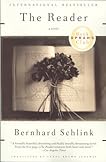
The Reader by Bernard Schlink

When I saw the film version of The Reader I instantly wanted to discuss it with someone. The ending was mystifying to me. I wanted to know how the two characters truly "felt" toward one another. Was it actually love? Was it love for both of them? I was struck by the story and immediately added the book to my "to read" list with hopes that a written version might add in a bit more explanation or narrative element complete with a bigger glimpse into the characters thoughts as if that would help me to understand better than the intense looks and implied emotions through action in the film.

What I discovered is that I actually knew LESS at times while reading the book. It seemed like there were some extra bits in the middle of the book. For some reason I don't recall him visiting with his father about the situation with Hanna at the trial... I think in the film he sees his professor. The ending was rather spot on.

Overall, I think the film was VERY well done and Kate Winslet was a terrific Hanna. I liked the book and it provided a very good book club discussion. I liked that the focus on the Holocaust was only minimal and while that colored and shaped much of what was going on in the book there was so much more. It was about personal responsibility, choices, and guilt.

To read this book in isolation would have been less satisfying for me than reading it and then discussing it with me book group.


Films watched in April and May

Star Trek
Wonder Woman (an animated film released in 2009)
The Women (1939)
The Women (2008)

Brideshead Revisited
New in Town

Music listened to in April and May
4 disc set of US Number Ones
with songs from the 50s, 60s, and 70s grouped by category:
  • Diners and Doo Wop (1955-1960)
  • Swingers and Sweethearts(1960-1964)
  • British Invasion (1964-1966)
  • Motor City (1966-1979)
Travel tunes to and from IRA
"My Life Would Suck Without You" by Kelly Clarkson

The Weepies -- Say I am You
Joan Jett -- Fit to Be Tied Greatest Hits
Kid Rock -- Rock n Roll Jesus
Hairspray The Soundtrack to the Motion Picture Musical

Other favorite songs from May
"Stagger Lee" by Lloyd Price
"Careless Whisper" by Seether

anything by Susan Boyle
Here's her singing Cry Me a River, for example. (love that song!)

Tuesday, March 31, 2009

Reading, Watching, Listening ... March in Review

March was a slow month for me in this regard. Too many distractions, I guess.

What I Read in March


Black and White (Speak) Black and White by Paul Volponi
Rating: 3 of 5 stars

Volponi's book came recommended by other English teachers as a book that students liked. I felt it was decent, but it didn't blow me away. In fact, I was more than a little annoyed by both protagonists and felt that their crime was so unjustified that I felt little sympathy for their predicaments. The book is written in alternating first person narrative.

In the story, "Black and White" are the nicknames of the two main characters, Marcus and Eddie. They've been friends for all of high school, inseparable on and off the basketball court despite racial tensions that seem to loom close to the surface in their school and community. Their nicknames relate to their respective races. Neither boy has the same economic means as some of their fellow teammates and when the entire team decides they need a certain expensive shoe rather than get a job at McDonald's (which both boys seem to believe is "beneath them," after all they ARE the stars of the basketball team), they decide to rob people at gun point in broad daylight. What a surprise when they get caught! Sheesh. The level of stupidity is a bit amazing to me.

What follows is a breakdown of who gets blamed and how each boy handles the situation, how it affects their friendship, how it affects their future prospects. Their struggle even spills over into other problems in the school that reflect back to an ugly incident a few years earlier when a student was killed at a basketball game.

I guess if students are interested in any of these topics this may be a book to recommend. In our book club, several students expressed a distaste for the ending and found much of the book rather ridiculous. However, we'd just read Sherman Alexie's "The Absolutely True Diary of a Part-time Indian" and this book suffered by comparison.

Reading in progress:
Errors in the Script by Greg Williamson
Luna by Julie Anne Peters
Sex, Drugs, and Cocoa Puffs: A Low Culture Manifesto by Chuck Klosterman
Eat This Not That! Supermarket Survival Guide by David Zinczenko
The Reader by Bernhard Schlink


What I Watched in March
Righteous Kill

The Family Stone (rewatched -- When Meredith inadvertently gives them all that perfect Christmas present, I just break down... funny film with touching moments.)

What I Was Listening to in March
Neko Case Middle Cyclone

I'm loving this CD. It's been my apartment overhaul soundtrack. She has such evocative lyrics.

"I love your long shadows and your gun powder eyes..."

Tuesday, January 27, 2009

2008 Book Stats


I'm a little late with this.

number of books read in 2007: 37

number of books read in 2008: 76 (78 sort of... 2 still in progress)
average read per week: 1.46 books
number read in best month: 16 books in August
number read in worst month: 2 books each in January and November

percentage female authors: 45%
percentage male authors: 55%

percentage rereads: 5%
percentage young adult: 31%
percentage graphic novels: 9%

fiction as percentage of total 68%
nonfiction as percentage of total: 29%

percentage of total liked: 85%
percentage of total ambivalent: 12%
percentage of total disliked: 3%

Monday, October 13, 2008

Reading, Watching, Listening ...September in Review

Books I Read in September: 9

Professional Book Club Read
A Teacher's Guide to the Multigenre Research Project by Melinda Putz

I really enjoyed this book. Putz presents a "twist" on the research paper in her multigenre research project. This isn't the first time I've heard of this kind of project. Melinda Putz doesn't claim to have "invented" the assignment. She has, however, explained it in a way that is very explicit and user friendly. She includes at the end of each chapter her actual handouts she gives students. I found myself flipping to these in order to make sense of her explanations. She includes student work to illustrate the explanations and goes a step further by including a companion CD with pdf or ms word files of each of her handouts for teacher use as well as one complete student multigenre project and many snippets from other students' work as well. Because much of the multigenre project is visual, the CD option really added my my understanding of the projects students produced.

It's impressive to consider all the ways a unit like this can impact students reading, researching, and writing. They must do a decent amount of higher level thinking, inferring, and synthesizing and I am always looking for ways to encourage that in students.

Finally, it's a project that --I-- want to do. Instantly I was running through possible topics in my mind and was trying to think of different genres I could use to depict the essential elements of those topics. It's easy to get excited about something so creative and I have a feeling that would be the same for students too. I am definitely going to try this with my students I just need to figure out how to adapt it to our school setting (block schedule) and at what grade level I want to begin.

For those curious about ways to engage students in research in creative ways this is a book I would highly recommend.

Young Adult/Juvenile Fiction
Battle of the Labyrinth by Rick Riordan

I've settled into this series and now am looking forward to each new episode. I enjoyed this one quite a bit and I'm not sure why it was more fun for me because it had all the same elements of the other books. Of course, this one featured the famed Greek labyrinth and Daedalus and Icarus and Helios Cattle and Kronos still is striving to return... I understand Book 5 is due out sometime this spring. I learned this from a 6th grader. Why not? All I can think is really? I have to wait THAT long?

RRVWP Book Club Pick--Fiction
Evidence of Things Unseen by Marianne Wiggins

I enjoyed the way the author portrayed the characters in this novel-- the watery-eyed, blinking, science nerd Foss, his young wispy white-haired wife Opal, the sometimes drunken, womanizing, says-it-like-it-is, Flash.

I also were impressed with the time span of the book and the historical references made to things like the Scopes Monkey Trial, WWI trench warfare, prohibition, Ku Klux Klan, the Tennessee Valley Authority, and the Manhattan project.

The story is a tender, intriguing, often heartbreaking look at a young couple's journey through these years reflecting both his desire to contribute to science and passion for things that are luminescent and their mutual desire to have a child.

Wiggins uses imagery relating to fish, to things that are illuminated, and of course there is the the frequent reference to things unseen. I really enjoyed this book and book clubbers, who finished it, seemed to as well. There was some comment that the ending seemed a bit "pat," or a bit too neat, but that didn't really detract from the overall experience for me. I would recommend this book.

Book about Books--Essays
Housekeeping Versus the Dirt by Nick Hornby

Housekeeping vs. The Dirt is a collection of Nick Hornby's columns in The Believer. Since I can't afford a subscription to the magazine I periodically read bits online and I buy Hornby's collections when I find them at a used book shop. I read The Polysyllabic Spree awhile back and didn't even realize another book was out there. Oh my goodness, I just realized the pun in the title. They are both book titles Hornby read and reviewed. Sheesh.

His subtitle is "Fourteen Months of Massively Witty Adventures in Reading Chronicled by The National Book Critics Circle Finalist for Criticism"

Each column begins with the month and year, next the list of books bought by Hornby that month and then the list of books read. What follows is an essay that discusses the books he read and his views on them blended with his witticisms on life and literature and "censorship" by editors (the 'polysyllabic spree' at The Believer... all very tongue in cheek). He gushes over Gilead, makes comments about his pal Sarah Vowell and her most recent book. He explores the ideas behind what makes a classic a "classic" and the difference between being a "person of letters" and simply a person who loves books. It's a conversation that keeps coming up in my life. Interesting stuff. Hornby's even sold me on reading a few of the titles he writes about. If you like books about books and a wry sense of humor you might like this. I did.

Rereads--Fiction
Big Cherry Holler by Adriana Trigiani
Milk Glass Moon by Adriana Trigiani

Big Cherry Holler picks up Ave Maria's story eight years after Big Stone Gap. In this one we explore the mind of Ave Maria, wife and mother, and discover that things are more complicated than the "and they lived happily ever after" we've come to expect with love stories that culminate in the basic plot of guy meets girl, overcomes obstacles, and marries her... the end. This is the book that follows. I found myself frustrated with Ave Maria in this one and angry with some of her choices but I could empathize too. The story deals with overcoming the loss of a child, her husband's livelihood being stripped from him as the mines close, and the struggle of fidelity in marriage. The same cast of characters are back and their own stories continue to develop as the story unfolds. Despite some of my discomfort with Ave Maria in this book, I still enjoyed it and the way it explored her humanity.

In Milk Glass Moon the focus is on the relationship between mother and daughter. Etta grows from a 12 year old to eighteen throughout the book. Ave Maria must face the changes that brings and also find a balance between her expectations for her daughter and the reality of who her daughter is. Set in both the Appalachians and Italy, this book is much like the two that precede it .... it touched my heart, made me cry, and laugh and wonder what my own relationship will be to my children... if I ever have any.

Fiction
Home to Big Stone Gap by Adriana Trigiani
Bet Me by Jennifer Cruisie

I think this was my least favorite book of the Trigiani bunch. There was nothing wrong with it, but it just didn't resonate the same way the others did. In this one Ave Maria goes through a period of estrangement with her best pal Iva Lou and I had a hard time really understanding it. I enjoyed their trip to Scotland and it actually made me want to travel there based solely on their descriptions. This book also had a smattering of recipes included in the text when various foods were mentioned. I can't remember if that happened in the other books; if it did, I didn't notice. I thought it was sort of cutesy and though it wasn't a terrible thing in any way, I liked it better in Like Water for Chocolate (a great book, by the way... espec. if you like magical realism). Even though this final book in the Big Stone Gap series didn't rock my world I am quite glad to have read them again. They are a bit melancholy but satisfying and comforting too.

I've read about five Jennifer Crusie novels that I can recall. The best way to describe these is as "romance" novels. Light and frothy. A romantic comedy in print rather than on screen. Crusie is from Ohio and often sets her novels in the German Village neighborhood in Columbus, home of one of my favorite bookstores--The Book Loft. Also my sister used to live there. The books are quick reads and focused on relationships. I used to own a bunch of them but I think I sold them all a few years ago. This one I just found under my bed, unread, this summer when I was doing a bit of housecleaning. It's about a slightly overweight girl who gets her guy. I wasn't expecting the explicit sex toward the end of the novel, but that wasn't totally unwelcome. Why not? :)

Graphic Novel
Batman: The Dark Knight Returns by Frank Miller

I liked this book well enough. I was expecting it to be more like the most recent Batman movie and though there were traces of this book in the film, it was quite a different story. This graphic novel is intricate and the art is pretty awesome, however I felt as I was reading it that for every three frames I was missing one. I'm sure that's not the case, but at times, I felt it was difficult to follow. Perhaps I needed to know more of the backstory for it all to make sense. I would certainly recommend it for superhero fans.

What I was Watching in September

TV
Project Runway Season 5
Friends Season 10 on DVD
Weeds Season 4
The New Adventures of Old Christine
Desperate Housewives
Brothers and Sisters
The Office
Grey's Anatomy
Heroes
Two and a Half Men

Presidential Debate
Anderson Cooper 360

I'm enjoying Project Runway as always and wish that they would run this show year round. Even though I can't sew worth a darn, I really do love and admire the creativity of others. I do love most of Kenley's stuff even if the girl is a bit annoying.

Weeds. Wow. Season out. And it was a doozy. Things just don't seem to be getting better or easier for Nancy Botwin and it was almost getting hard for me to watch the train wreck in front of me when I'd sit down to the computer to see the next episode. I wonder what Season Five will bring.

As the fresh seasons of the network TV programs start I will say that I love Heroes. It's quite the frightening adrenaline rush for me. Truly as scary as it gets for me! This season does this back and forth from the future to now thing a lot and it could prove a little confusing. But it's one thing that I enjoy about Lost. And if I can't be seeing new episodes of that right away I am more than happy to have the mental workout Heroes provides.

While The Office remains as wonderful as ever, I have to say I just love, love, love The New Adventures of Old Christine. It doesn't get old for me. She's just too funny. A wonderful character, wonderfully acted. And the entire cast is superb!

The rest of the programs are a bit of the same old, same old... not sure why I'm watching them... etc. I will say I find the 5 years into the future shift for Desperate Housewives to be peculiar but maybe they needed something to give them more room for plot growth. It's okay, I guess.

I don't have much to say about the debates but I will mention that I think both Anderson Cooper and John King are pretty yummy.


Films
Legally Blonde
The Parent Trap
Failure to Launch

All three are films I watched on TV on a lazy Sunday. All three are films I've seen before.

What I was Listening to in September

This was a light music month. Not that I wasn't listening to music. On the contrary. I was immersed in music trying to find good trivia songs and I even made it to a couple concerts. Still I didn't find myself immersed in one CD that I listened to again and again. I did enjoy a few LPs.


Here's one:

The Very Best of Connie Francis on vinyl


a random sampling from my MP3 player here is my posted shuffle:

September 14, 2008

Californication by Red Hot Chili Peppers
If looks Could Kill by Heart
Is She Really Going Out With Him by Joe Jackson
I Hate Everything About You by Three Days Grace
Levon by Elton John

Thursday, September 11, 2008

Reading, Watching, Listening ... August in Review

Books I Read in August: 16

Because I've been completely addicted to books you'll find that my list of what I read is HUGE, but I didn't see a single film... Netflix is making money off me this summer. Because my list was longer than normal I divided the titles up by genre and I used my reviews from Goodreads. Why write two reviews?

Young Adult Novels
Eclipse by Stephenie Meyer

Hmmmm... this book seemed rather LONG to me... I'm not sure how some folks can read it in a day. I guess I felt that way with some of the Harry Potter books too, though others read them in one sitting. I must say, it's for certain... I don't like Jacob Black. I find him annoying and immature and I don't understand Bella's attraction to him. Of course, I don't really get her either. Oh well. The Cullens I like. Their backstories in this book were interesting and I wish there was more of that in the books. Even some flashbacks, perhaps? I am sure I'll read Breaking Dawn sometime soon.. but maybe not for a few weeks. I need a break from the icy cold, white teeth, sparkling vampire world.


Percy Jackson and the Lightning Thief by Rick Riordan

While Harry Potter and friends attend Hogwarts School of Witchcraft and Wizardry, Percy Jackson finds himself at Camp Half-Blood where he, like Harry, must come to terms with who he REALLY is... in this case, he's the son of a Greek God and a mortal woman. It's hard to avoid comparisons to the Harry Potter series... even the dark dangerous meanie seems to be a bit like "He Who Shall Not Be Named" and yet I can see this story series has promise for young readers. I didn't love it as much as I'd hoped, but I liked it quite a bit. 3.5 stars worth of love.

I read the book after recommendation from Sophie G, a favorite young reader for whom this book is perfectly suited. I was hoping for a good work of fiction that might infuse a young reader with a desire to pursue knowledge of Greek mythology. The book IS full of allusions to various gods and goddesses and stories of heroes and villains from the myths. It serves the purpose I'd hoped for and I think it's cool that Riordan chose to explore this concept--the Greek Gods still living (of course, they are immortal) and thriving in our world today!

Despite the similarities to Harry Potter (hard to avoid in some ways) and Percy's whiny (almost Holden Caulfield "I just got kicked out of another private school") voice at the beginning I did find myself eager to find out what happens. I would recommend this for young readers.

Percy Jackson and the Sea of Monsters by Rick Riordan

I think I enjoyed this one better than the first because it just jumped right into the conflict and there was less soul searching, figuring out Percy was a half-blood etc. Also, this story played with Homer's Odyssey which I thought was pretty cool. I thought it would be a fun complement to students reading The Odyssey or an opportunity for younger readers to learn about that story.

Percy Jackson and the Titan's Curse by Rick Riordan

In this third book, Percy, Annabeth, Thalia, and Grover begin the story by going on a mission to retrieve two new half-bloods which sets the story's conflicts in motion. Annabeth goes missing, Artemis makes an appearance and recruits Bianca, one of the new half-bloods, to be part of her immortal army of archers. The oracle's message of doom for one of them keeps things tense as a group of young half-bloods and archers seek their friend, try to save Artemis, and use all their powers to thwart Luke and the Titans who are threatening all of Olympus. Apollo makes an appearance in this one and both he and Artemis are quite cool.

Stargirl by Jerry Spinelli

This book depicts a high school girl whose rare, unusual spirit soars. It's a story about individuality--about mob mentality, about conformity. Yet, even more it's a story about giving to others, generosity of spirit, zest for life, and seeing the world with new eyes. I think this is a lovely book and one I'd highly recommend.

Love, Stargirl by Jerry Spinelli

At first I didn't love this book as much as the first. It was a bit unsettling to hear Stargirl's thoughts--it's written in first person, diary style as if it were a long letter to Leo. She seemed far more normal and hesitant and less fantastic than she did when the story was told through Leo's eyes. Of course that makes sense. Still, I found myself loving this girl all over again and discovering my cheeks wet with tears when the story ended. Her interest in the Winter Solstice is something I totally loved and is something I "get." I used to love the equinoxes and solstices and look forward to those days much more than I have in recent years. I think I need to find my own way to mark those moments so I can celebrate them in Carmyn-girl style. I enjoyed both Stargirl books.

The Tiger Rising by Kate DiCamillo

This book is reminiscent for me of her other more popular tale Because of Winn Dixie. In both books the protagonist has lost a mother and is alone in a new town. Both children are pretty sad and in need of a friend. Both children have a grown up who is a straight shooting kind person who becomes a confidante. I thought The Tiger Rising was good but almost too short... like a novella rather than a novel. But I guess for a young reader it might be just fine. I wanted more, especially at the end. Overall, I feel that DiCamillo is a fine writer with interesting well-crafted characters and she has a great sense of detail. I love her books and this was no exception.


The Willoughbys by Lois Lowry

This book is rather short (174 pages in a fairly large font) and echoes the Lemony Snicket books in tone and vocabulary. Lowry is often alliterative and actually includes a cute glossary at the end of the book. She also includes a bibliography of 13 "books of the past that are heavy on piteous but appealing orphans, ill-tempered and stingy relatives, magnanimous benefactors, and transformations wrought by winsome children" which are referred to, however momentarily, in this brief novel. I was familiar with all but one title so in some ways I felt this book offered these small rewards to its adult readers and it all felt a little tongue-in-cheek. It's a 3.5 star rating I like Lois Lowry and also, I think it has a nice cover.


Graphic Novels
Wonder Woman Vol. 1: Gods and Mortals by George Perez

This novel felt more "comic book" style than any of the others I've been reading lately--paper quality, appearance of text. It was entertaining and held my attention, but I think I preferred the Darwyn Cooke treatment in The New Frontier series.

Wonder Woman Vol. 2: Challenge of the Gods by George Perez
Maybe I've had a bit too much of the Greek gods lately but I wasn't really remembering that Wonder Woman's story was so interwoven with Olympus. It wasn't a bad thing, but I didn't love that part of it so much either.


History
Flappers and the New American Woman: Perceptions of Women from 1918 Through the 1920s by Catherine Gourley

Flappers and the New American Woman is the second book in the Images and Issues of Women in the Twentieth Century series by Catherine Gourley. This series features tons of info in sidebars, photo captions and period advertisements in addition to the main text. This book explores the "modern girl" and the myriad of changes she faced in the 1920s. Exploring media, housewives, beauty, morals and manners, race, politics, and more, Gourley introduces young readers to big names and even a few I didn't know. We learn about the impact of famous women: Clara Bow, Margaret Mead, Nellie Tayloe Ross, Margaret Sanger, Lillian Gilbreth, Edna St. Vincent Millay, Elinor Smith and many, many more. I would highly recommend this series for young readers interested in women's history.

Fiction
Big Stone Gap by Adriana Trigiani

I love the Big Stone Gap series. I'd nearly forgotten how much. The magic is still there for me. One thing I hadn't realized is that the book is written in present tense. In my creative writing workshop earlier this summer, we were discussing such things and I said then how I prefer writing to be in past tense and isn't most fiction told that way anyway. How interesting to realize at least one book I love is not. Now, I want to start pulling beloved books from the shelves to examine the tense! Hmmm... I guess if it wasn't jarring to me, then it's well done either way. But I digress.

This book showcases a part of the United States I can barely imagine. While I have no desire to move to Appalachia, I can appreciate Trigiani's efforts in transporting her readers there. Growing up in a small town gives me a foothold in understanding Ave Maria's world. And remaining single at 35 in a relatively small community gives me a window into her character's mind. I love the supporting cast of characters as well, and though the story is a wee bit predictable, I still love where it takes me. I look forward to rereading the other two stories in the trilogy and finally reading her fourth book about Ave Maria and family.

Snow Flower and the Secret Fan by Lisa See

I expected I would enjoy this book, based on my Amy Tan experiences and while this did have a similar feel to it, I wasn't captivated in the same way. It read quickly enough for me, but in some ways I wasn't really loving Lily, particularly at the end. I was frustrated with Snow Flower, as well. I can see how this might be interesting to discuss in a book club. Questions of friendship, commitment, honesty, duty might all arise. I felt if Snow Flower had been more honest about things that Lily would have understood her better but then when she was honest, Lily still didn't understand and it actually seemed to make things worse. It made me question whether they were actually loving friends or two women in love with the idea of being lifelong friends. I felt as if Lily didn't really understand Snow Flower and perhaps Snow Flower DID understand Lily.

The Alienist by Caleb Carr

I was eager to read this book because I'd heard good things. It reminded me of The Devil in the White City because it was about a serial killer and because it was set in the same era, though not the same city. However, I am not really a big fan of the crime story and so the parts I liked best in The Devil in the White City were the parts on the Chicago World's Fair and its architects. Erik Larson's book was a TRUE account, a history that read like a novel. This book was fiction but felt real. I was interested in the story from start to finish but I do feel it dragged a little and was a bit of a slower read for me. Perhaps Caleb Carr could have pared it down a wee bit. I loved the descriptions of the food, however. Delmonico's. Yum! I think many people would enjoy this book and I am glad I read it. But if you haven't read The Devil in the White City, I would read THAT one first!

Nonfiction
Dumbing Us Down: The Hidden Curriculum of Compulsory Schooling by John Taylor Gatto

This book's dismal tone from start to finish made the read an unpleasant one for me. The format also left much to be desired. The book had 35 pages of preamble in the form of foreword, introduction, publisher's note from the first edition, and about the author. The following five chapters over 94 pages were reprinted speeches or essays that lacked flow or transition and didn't truly follow through on what I thought the book would offer. Dumbing Us Down: The Hidden Curriculum of Compulsory Schooling is something I set out to read eager to see if Gatto was going to corroborate some of my own ideas about public schools in our country. Instead, he seemed to not understand schools at all. At least, not as I've witnessed them. His credibility was instantly damaged,in my eyes, and it was difficult to lend much credence to his words. Furthermore, his tone was such that I was irritated and had he been a TV (he'd like this reference)I would have changed the channel. :)

Some of his points in the "Seven Lesson Schoolteacher" were things I could agree with. Where he loses me is his vehemence with which he lambastes all schoolteachers and schools as falling into this trap. Sure, even if one is to assume his theory is correct and the entire machine of public education is broken in the United States, not every school, not every teacher is the demon he makes them out to be. And furthermore WHAT exactly is his solution? It's VERY clear he doesn't believe in school reform. Just get rid of all compulsory schooling. Abandon the public school idea. Okay. So we do home schools or create schools in a private club sense. But what of the two income family. Surely it's not SCHOOL that is robbing them of the ability to spend family time together but the necessity of earning enough money to get by. Some people have the ability to live off one income, many do not have that luxury. How does this idea factor in for Mr. Gatto's grand solution? This was something I felt he needed to explore if he was going to make such broad declarations.

I felt that much of what Gatto was stating was dated. Since 1992 there's been a standards movement that serves to create continuum of ideas and skills from kindergarten to grade 12 in areas like reading, math, writing and more. More teachers are using best practices and teaching using inquiry based methods. Nothing he wrote addressed these things because it's only in the past 15 years that these things have been flourishing. His final chapter makes mention of standards, once again with a disparaging word. What is ironic, is that in an earlier chapter schools were lambasted for lacking these standards and continuum and connectivity in curriculum and then in the congregational chapter he denounces the the presence of the very thing he was shaming schools for not doing. Not only is Gatto, inconsistent, he is unrealistic, and it seems his way if it were followed to the letter would leave HUGE groups of people with no education at all, nor any realistic or fair way to get it.

In chapter three, Gatto says of his subbing experience in New York City,

"After three months the dismal working conditions, the ugly rooms, the torn books, the repeated insistences of petty complaints from authorities, the bells, the buzzers, the drab teacher food in the cafeterias, the unpressed clothing, the inexplicable absence of conversation about children among the teachers (to this day, after thirty years in the business, I can honestly say I have never once heard an extended conversation about children or about teaching theory in any teacher's rooms I've been in) had just about done me in."

This quote just about did me in. I cannot fathom working in an environment like he's described. None of that characterizes my school or others I've worked in. And in 30 years to never have heard an extended conversation about children or teaching theory? What kind of planet is this guy from. Not only are teaching theory and school improvement topics that are discussed at length in our teacher's lounge, in our Monday morning staffings, at staff meetings, and during our professional learning community meetings, but we also regularly express concerns about various students and pool resources, information, and ideas about how to help particular students achieve their learning potential. We approach our students with a team approach and this at a high school level. So, I find Mr. Gatto very much mistaken. Perhaps no one wanted to discuss theory with HIM. :) In fact, if I were creating my own select village as he describes in chapter five, I'm pretty sure he would not be invited to stay.

I'd sort of like to pair Steven Levitt (Freakonomics) and John Gatto and see what sorts of correlations could be drawn from some of the ideas Gatto puts forth with no statistical evidence whatsoever, aside from his own 30 years of what appears to be pretty limited experience.

If you are looking for a book with some radical ideas about public schools and the ways they damage kids and destroy families, be sure to pick this book up. If you are like me and just want so understand a bit more about the underside of public schools, you might find what you want here, but take this with a block of salt and be prepared for some grating, over-the-top, generalizations.

Freakonomics: A Rogue Economist Explores the Hidden Side of Everything by Steven Levitt and Stephen Dubner

One thing I discovered after reading this book was how there are folks out there who really do NOT like it. Some calling Levitt a racist, others saying his "economics" is a joke. I am not really sure how I feel. I guess as I read it I was intrigued by the suppositions. I wasn't utterly convinced but I was impressed by the idea of looking at sociological phenomenon in a way that others hadn't really done before. It's about "looking outside the box." Sure some of his chapters could be offensive. Some of it was more interesting than others. I wasn't really into the chapter on "baby names and its impact on the success of a person." I did find the stuff on the Ku Klux Klan interesting though. That's a subject I really don't know a lot about. I didn't care for the way Dubner sort of hero-worships Levitt in the beginning of each chapter. Even if it's done tongue-in-cheek (which I am not sure it was) I was a little sickened. In the end, I'm not sorry I read this and I think there are worthwhile ideas in this book. You may want to read some other reviews, both for and against the book before commiting to the read or to a purchase since it's still in hardcover.


What I was Watching in August

TV

Friends Seasons 6,8,9,
Project Runway
Weeds Season 4

Films
None

What I was Listening to in August


Tigermilk by Belle and Sebastian

This is their debut album (1996) but it's all the public library had. I have heard them on our local NPR station and I knew I liked the sound but I really hadn't heard a full album until this one. I need to get my hands on a bit more of their work before I decide that I am totally in love, but I will say I like this one quite a bit. Their website is cool too. I like the bits about the band.

Get Born by Jet (2003)
This isn't the "newest" of albums either but it's my first REAL listen to this group. Of course, I'd heard songs by them before but had no clue who was signing or what they were about. We used "Are You Gonna Be My Girl" at trivia and it prompted me to go for the whole CD.

a random sampling from my MP3 player here are my posted shuffles:

August 6, 2008

In Spite of All the Danger by The Beatles
Cuttin' Out by Donovan
Fading Like a Flower by Roxette
Talk to Me by Stevie Nicks
Promises by Eric Clapton


August 12, 2008

I Don't Want to Lose You Yet by Supersuckers
Breathe by Anna Nalick
Won't Get Fooled Again by The Who
Hello, Darlin' by Wanda Jackson
Tide is High by Blondie

August 19, 2008

My Rollercoaster by Kimya Dawson
The Sweetest Thing by Juice Newton
Pretty by The Cranberries
Freedom by George Michael
SOS (Rescue Me) by Rihanna

LinkWithin

Related Posts Widget for Blogs by LinkWithin